

The Learn Play Thrive Continuing Education Summit
Supporting Social and Emotional Well-Being for your Autistic Clients
This transformative recorded, self-paced online CE summit takes place on demand from February 3rd to March 17th, 2026. Grab your spot today so you don't miss it!
Every single provider has the potential to help our clients access deep levels of authentic joy, connection, and well-being. This summit will give you concrete tools to make a profound positive impact on your clients’ social-emotional well-being, while reclaiming your love and passion for your work.
Our 2026 continuing education summit features eight practice-changing talks from a neurodiverse panel who have the lived experience and clinical expertise to truly transform the work that we each do. Several talks this year have a special emphasis on supporting non-speakers. Each talk is 90 minutes and packed with both paradigm-shifts and concrete takeaways for your work.
Starting February 3rd, you’ll have six weeks to watch as many of the talks as you wish on-demand, getting CE credit along the way. Registration will remain open until the end of February.
This summit will be registered for CE credit with ASHA, AOTA, NASP, and NBCC.
Investment
The cost is $339 and includes six weeks on-demand access to eight 1.5 hour courses (12 credit hours of recorded content).
Access
When you register, you’ll have access to all eight practice-changing 1.5 hour pre-recorded talks on-demand for six weeks beginning February 3, 2026 and ending March 17, 2026.
Participants will have the chance to submit questions to summit instructors, and access recorded Q&A sessions until the end of May, 2026.
Continuing Education
Participants will receive a certificate of completion for each talk they attend; watching them all is not required for CE credit. This summit will be registered for ASHA , NASP, NBCC and AOTA CEUs.
This summit consists of eight 90 minute intermediate level courses (total of 12 contact hours). The talks are each registered for .15 AOTA CEUS , .15 ASHA CEUs, 1.5 NBCC hours, and .15 NASP CEUs.
You will receive a certificate of completion for each talk you complete, after completing a short quiz for each.
Watching the recorded Q&A sessions is encouraged but does not count towards continuing education hours.
FAQs
Information about completion requirements, accommodations, and more can be found in the FAQs.
The 2026 Learn Play Thrive Summit
Speakers & Presentations
We’ve gathered a diverse and neurodiverse panel who have dedicated their careers to understanding the deepest needs of our Autistic clients and sharing it with others. Their talks will transform how you approach social-emotional well-being on every possible level. Our hope is that this summit will help you move towards practice that is deeply healing and supportive for your Autistic clients, and aligned with your person-affirming values.
More Than Words: Supporting Interoception Communication for Nonspeaking Clients

More Than Words: Supporting Interoception Communication for Nonspeaking Clients
Interoception is the sense that tells us how we know what we are feeling in our bodies. For our non-speaking clients, supporting interoceptive awareness is deeply important for building self-awareness, self-advocacy, connection, safety, communication, and well-being. And the good news is, being able to speak isn’t a prerequisite for participating in interoceptive learning.
In this training, occupational therapist Kelly Mahler and Autistic speech language pathologist Caroline Gaddy teach us exactly how we can learn about the interoceptive experiences of our non-speaking clients. Their practical and thoughtful approach centers curiosity, validation, humility, care, and repair.
Kelly and Caroline share concrete strategies, activities, scripts, and processes we can put into place in our sessions to support interoceptive awareness for our non-speaking clients. They show us goals that reflect the needs and well-being of our clients. They demonstrate how to set up systems that help us learn about a child’s pain or anything else that isn’t feeling good to them, even when they aren’t totally sure what they are feeling. They give us scripts we can use to show curiosity about a child’s experiences, and show us how to move away from inadvertently harmful practices into supportive practices that truly help our non-speaking clients feel seen, heard, and cared for.
Kelly Mahler, OTD, OTR/L (she/her)
Nonfinancial: Kelly has friends, family members, and colleagues who are Autistic.
Caroline Gaddy, MFA, MA, CCC-SLP (they/she)
Nonfinancial: Caroline is on the board for the Disability Caucus of ASHA. Caroline is Autistic and has friends and family who are also Autistic.
There is No Function Without FUN: Play On

There is No Function Without FUN: Play On
You’ll explore nuanced questions, like “What’s a child’s stim versus a passion versus an interest, and when are these actually PLAY?” You’ll learn about supporting both solitary play and social play to increase well-being. And you’ll learn concrete strategies for helping kids access their authentic play through regulation, non-directiveness, diversification, and more.
After this training, you’ll be equipped to help build social environments where, in Dr. Fede’s words, “The only norm is difference.”
Amy Laurent, PhD, OTR/L (she/her)
Nonfinancial: Dr. Laurent has friends, family members, and colleagues who are Autistic. Autism Level UP! is committed to the creation and dissemination of free and low cost resources designed by and for the ND community.
Jacquelyn Fede, PhD (she/her)
Nonfinancial: Dr. Fede is Autistic and has friends, family members, and colleagues who are Autistic. Autism Level UP! is committed to the creation and dissemination of free and low cost resources designed by and for the ND community.
Colour Outside the Lines: Exploring Art, Gender, and Neurodivergence Beyond the Binary

Colour Outside the Lines: Exploring Art, Gender, and Neurodivergence Beyond the Binary
Chenai helps us reframe a clients’ refusal as an act of self-protection, and shares how non-directive art prompts can re-center their autonomy and well-being. She helps us explore our clients’ intersectional identities in a way that centers justice, rather than asking our clients to adapt to oppressive conditions.
Throughout this beautiful, poetic, and deeply engaging training, Chenai shares specific art and movement-based prompts to use as invitations for your clients, and also for your own exploration of identity and regulation.
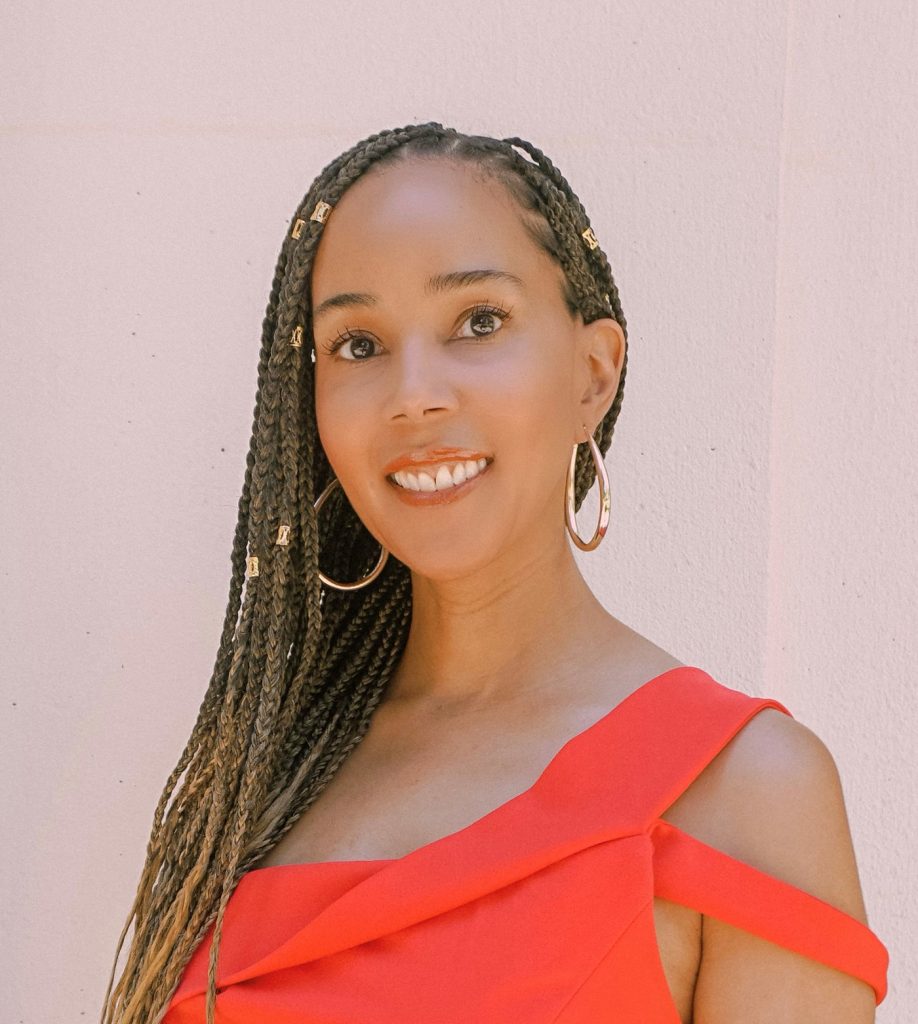
Chenai Mupotsa-Russell MTAP, AThR (she/her)
Nonfinancial: Chenai is an unpaid member of the Australasian Society for Autism Research (ASfAR). She is also a full member of the Australian Professional Association for Trans Health (AusPATH), an international member of the The Society for Community Research and Action (SCRA)-Community Psychology, Division27 of the American Psychological Association, and a professional member of the Australian, New Zealand and Asian Creative Arts Therapies Association (ANZACATA). Chenai is Autistic and has friends, family members, and colleagues who are Autistic.
Black Autistic Children: Moving Beyond Marginalization and into Liberation

Black Autistic Children: Moving Beyond Marginalization and into Liberation
Black children in the U.S. face specific, deeply ingrained biases and prejudices in nearly every setting. For example, due to the adultification of Black children, Black children are viewed as “less childlike” than their white peers; they receive harsher punishments in schools than their white peers; and they are more likely to be put into the carceral system due to school behaviors. And this starts in early childhood, impacting our children’s sense of self, their families, and their communities. Heather helps us put anti-Black racism in historical context, tracing practices and attitudes through history to the present day.
Heather walks us through a case study centered in New York City, demonstrating the subtle and overt ways that Black Autistic children are marginalized in practice. She helps us see how these patterns appear in every community, even those without BIPOC representation. And she helps us reflect on our own practices, identifying how we can put anti-racist practices into action.
Heather Clarke, MSc, MSPED, MA (she/her/ella)
Nonfinancial: Heather is Autistic and has friends, family members, and colleagues who are Autistic.
My Sensory Life: From Isolation to Participation with Affirming Sensory Supports

My Sensory Life: From Isolation to Participation with Affirming Sensory Supports
In this talk, Autistic OT Kim Clairy shares her own experiences of living with sensory processing differences. She walks us through what the world looks, sounds, and feels like to her, and what practical strategies and routines help her thrive in daily life. This talk explores synesthesia, misophonia, loss of speech and vision during sensory overwhelm, dyspraxia, interoception and more. Kim shares in great detail what it looks like to understand and deeply accept your sensory needs, and how to cope with sensory overwhelm and intense sensory input needs in daily life. She shares how we can replace harmful practices like desensitization with flexible and comprehensive routines, paired with an attitude of nonjudgemental acceptance.
If you’re new to understanding sensory processing, this course will touch on every sensory system in an impactful way. And if sensory processing is a regular part of your practice, learning from Kim’s nuanced descriptions of her experiences will change how you think about your Autistic clients’ experiences. You’ll walk away with a robust list of strategies to support kids in different emotional states and difficult routines during their day, including AAC scripts and visual supports for identifying and communicating sensory needs.
Kim Clairy, OTR/L (she/her)
Nonfinancial: Kim is Autistic and has friends and colleagues who are Autistic.
Beyond Words: Autistic Communication, Inner Voice, and the Neuroscience of Connection

Beyond Words: Autistic Communication, Inner Voice, and the Neuroscience of Connection
Attunement is a core need, and missing it has profound impacts. Misattunement silences children’s communication attempts, their felt sense of safety, and even their identity. Maribel teaches us how we can use our presence to communicate that we see and hear our Autistic clients – especially those who are non-speaking – and to help them feel safe with us.
Maribel shares examples, mantras, videos, case studies, principles, and more to help us learn to move towards co-regulated communication. She also helps us explore ableism and implicit bias and how they impact our connection with children. This talk helps us become the connective, attuned communication partners our clients deserve.
Maribel Serrano Holder, M.S., M.A., CCC-SLP, (she/her/ella/la)
Nonfinancial: Maribel is Autistic and ADHD and has friends and family members who are Autistic and otherwise neurodivergent.
Everything’s Connected to Everything: An Autistic M.D.’s Perspective on Autistic Health and Wellbeing

Everything’s Connected to Everything: An Autistic M.D.’s Perspective on Autistic Health and Wellbeing
In this talk, Autistic physician Dr. Mel Houser shares what we can concretely do to remove barriers to health and well-being for our Autistic clients. This talk dives deep into social isolation and its physical impact through the lens of: 1) neuroception, 2) neuronormative expectations, 3) monotropism, 4) physical barriers, 5) cognitive barriers, and 6) Autistic burnout.
Dr. Houser shows us what universal design can look like for neurodivergent kids in our clinics and schools. And she teaches us how we can create communities that normalize all paths to social participation, how we can build in meaningful executive function supports, and accommodate a variety of sensory and communication needs. (Mel’s videos from her Zoom Stuffy Party are a special treat!)
Dr. Mel Houser, MD (she/they)
Nonfinancial: Dr. Houser is the Founder and Executive Director of All Brains Belong VT, a nonprofit 501(c)(3) organization. She is Autistic with a PDA profile, as well as ADHD, dyslexic, dyscalculic, and dyspraxic. She spends most of her personal and professional life with people with similar neurotypes.
Facilitate Authentic and Motivating Social Groups: Letting Things Get Messy to Make Social Stick
In this talk from SLP Susan Ehlerman, you’ll learn how the dynamic, complicated social dynamics that take place during your sessions can build an internal dialogue of worth and competence for your clients in future social encounters. Susan teaches us how to identify and foster social experiences that are authentic and meaningful to our Autistic clients through interest-based groups. She shares concrete (and incredibly FUN!) examples of what social groups based on strengths and interests look like in practice. These groups are designed to help kids feel confident that they can take on the messiness of real-life social interactions without betraying their own authentic needs.
This talk dives deep into tricky social situations – like a blunt but honest comment that hurts another kid’s feeling, a kid whose behavior disrupts the flow of a group game, or a social group where everyone really just needs a break or rest. She teaches how to support our Autistic clients through validation and by gently translating the social dynamics to the child in a way that empowers their own decision making. She also teaches us to learn about the child through curiosity, holding space, validating, perspective taking, witnessing their strengths, and more.
This talk is our roadmap for how to create and model a culture where every way of being is welcome. And it’s our guide for how to help our Autistic clients explore social connection in a way that affirms authenticity, choice, connection and advocacy.
Susan Ehlerman, CCC-SLP, CMT (she/her)
Nonfinancial: Susan has friends, family members, and colleagues who are Autistic and have ADHD.
This summit is
for you if...
- You're an OT, SLP, mental health provider, school psychologist, or other professional working with Autistic clients in any setting
- You want to work in a way that supports the deep well-being of your Autistic clients rather than focusing on expected external behaviors
- You're willing to let go of old ways of supporting Autistic clients and embrace strategies that allow them to feel safe and authentic
- You want to support your Autistic clients in a way that is culturally responsive and centers diversity, equity, and inclusion
Reviews from Previous LPT Summits
This is more than just a summit.
Learn from a Neurodiverse Panel
Because Autistic people are the experts on autism, every speaker on our panel is listening to and learning from the Autistic community, and many are Autistic themselves. The talks in this summit are all reviewed by a neurodiverse panel of professionals to ensure they are relevant to the clinical practices of OTs, SLPs, social workers, counselors, and school psychologists, and aligned with LPT's values of neurodiversity and intersectionality.
Find Your Community
When you join the summit, you'll also join a private community of other therapists who share your values. Together we'll build our referral lists, share strategies and ideas, problem solve tough scenarios, and support each other as we grow into the therapists we've always wanted to be.
Solidify Your Learning
After each talk, you'll have the opportunity to submit questions to the instructors so that you can move past any barriers to applying your learning to your work. These will be shared in a recorded Q&A session that you can watch at your leisure during the summit. After each talk, you'll have the opportunity to answer a reflection question to help identify how to apply your learning to your work and share your journey with other participants.
Frequently Asked Questions
The topics in this summit apply throughout the lifespan. The specific examples and strategies given in the talks are mostly focused on children from toddlerhood through adolescence.
The talks include lectures, slides, videos, case studies, and an opportunity for you to apply your knowledge.
Yes! You’ll have access to the lectures for six weeks starting on February 3rd.
Yes! If 3 or more people from your company plan to enroll email me the names of everyone enrolling at admin@learnplaythrive.com and we will provide a coupon code. It’s 15% for 3 registrants, 20% off for 4 or more, and 30% off for 7 or more. This does not stack on top of the early bird discount, but may be used in place of it. Each learner will need to sign in to our course platform to complete the course individually to receive credit..
We offer scholarships to therapists from under-resourced countries. Please see our scholarships page for details.
You will have 6 weeks access to the course once it launches on February 3rd.
We are able to provide refunds or transfer your enrollment to another learner before the summit begins. Once the summit begins we are not able to offer refunds. If for any reason the course is canceled by the provider before your registration period has expired, you will receive a full refund.
All videos in this course have closed captions that can be turned on or off. If you have other learning needs, please email admin@learnplaythrive.com before registering. Accommodations will be made to support learners in compliance with the Americans with Disability Act.
You can send an email to admin@learnplaythrive.com
To see our full complaint policy, please visit this page
Learn strategies that will totally transform your work
and meet thousands of other professionals
who care for their Autistic clients on the deepest possible level
The recorded materials in these courses were last updated September 2025.
This course is available for ASHA CEUs starting February 3rd, 2026 until March 17th, 2026. ASHA CE Provider approval and use of the Brand Block does not imply endorsement of course content, specific products or clinical procedures. The assignment of AOTA CEUs does not imply endorsement of specific course content, products, or clinical procedures by AOTA.
Learn Play Thrive is approved by the National Association of School Psychologists to provide continuing education for psychologists. Learn Play Thrive maintains responsibility for the program and its content. NASP Approved Provider # 1172.
Learn Play Thrive, LLC has been approved by NBCC as an Approved Continuing Education Provider, ACEP No. 7586. Programs that do not qualify for NBCC credit are clearly identified. Learn Play Thrive, LLC is solely responsible for all aspects of the programs.